Josh’s Journey: A Family’s Faith and a Warrior’s Resolve
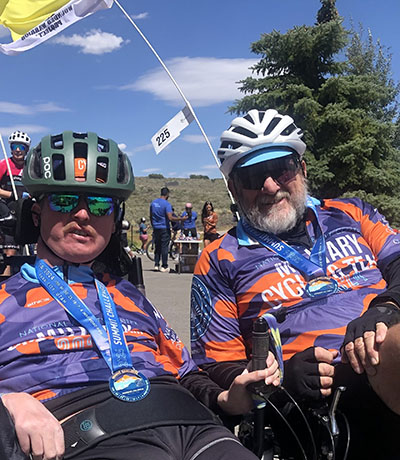
Service came naturally to Josh Fohner. Even as a child, he sought ways to help others, whether through church activities or mission trips during high school. After graduating from the University of Arkansas, his desire to serve led him to enlist in the U.S. Navy.
Josh joined the Navy with the goal of becoming a Navy SEAL, but during special ops training, he suffered a shoulder and back injury that resulted in medical retirement. He relocated from Arkansas to Colorado, found work, settled into an apartment, and embraced the active, adventurous lifestyle he loved.
A bike ride home from the gym changed everything for the Fohner family. Josh was struck by a car on the morning of Sept. 27, 2016. The impact sent him crashing into the vehicle’s windshield. He was unresponsive when he arrived at the hospital.
The outlook was grim. Josh was in a coma. He had a traumatic brain injury (TBI) and a broken neck. His parents, Mike and Kelly Fohner, were told there was a good chance he wouldn’t survive. But one neurosurgeon reminded them there’s always a chance.
That sliver of hope was enough.
“We decided that if the Lord wanted to take him, he has every opportunity to do so, but we were going to give him every fighting chance to live,” Mike said.
15 Months in a Coma — and a Sign of Life
Josh remained in a coma for 15 months. During that time, he endured seven bouts of pneumonia, and his care team transferred him to the VA’s polytrauma unit in San Antonio.
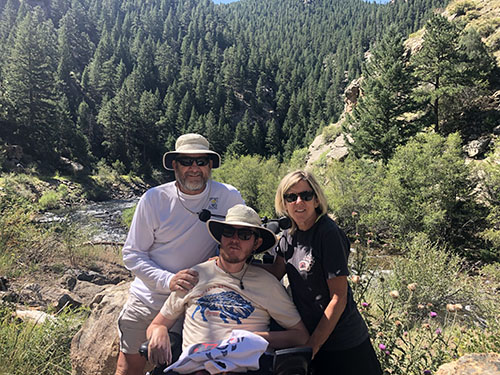
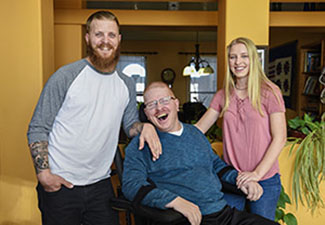
Josh with his parents, Mike and Kelly.
“When we first came home … he came home in a coma, and we were trained on how to care for him,” Mike said.
But everything changed during a hyperbaric chamber treatment, which the family pursued as a last resort. Mike monitored Josh’s heart rate during the sessions. On their fifth visit, something happened that Mike will never forget.
Josh wiggled his left toe.
It could’ve been an involuntary movement, but when Mike asked Josh if he was doing it on purpose, the toe continued to move. Then, Mike gave him a simple instruction: wiggle for yes.
“And then he wiggled,” Mike said.
That toe wiggle became their lifeline.
“He had now emerged from this coma, but he still couldn't speak, couldn't feed himself, couldn't move,” Mike said. “He was still in a rough place, but he had emerged.”
Slowly, Josh was able to do more movements, like tapping his foot. Although the injuries and TBI left Josh unable to speak, he longed to communicate. His family built him a communication system using yes/no signals, then letters. Through therapy, Josh gained more control of his foot movements and developed a means of communication through foot tapping.
“He would wiggle his toe on the letter he wanted … and tap out a sentence,” Mike explained.
For the first time since the accident, they could see Josh coming back.
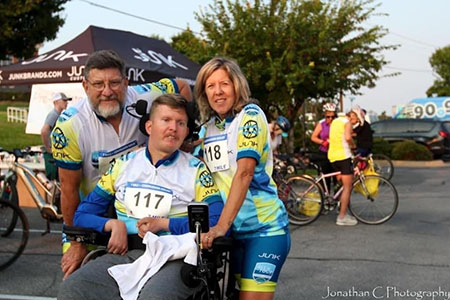
Josh, Mike, and Kelly at a cycling event.
A Fighter at His Core
Once Josh emerged from the coma, his drive became clear.
“He’s always been the kind of kid who tried to do things to his potential,” Mike said.
That spirit never softened, not even after the accident.
It was Josh who made the next big decision about his recovery. The progress he’d made told him he was ready for something bigger. So, when Mike proposed completing a long bike ride to raise money for additional therapy, Josh thought it over. A week later, he tapped out his response: He wanted to ride, too.
Within months, they had a custom side-by-side recumbent bike built to accommodate Josh’s needs. Father and son spent nine months training together. Then they set out from the site of the accident on a 908-mile ride to their hometown in Arkansas.
“We did it in 21 days … it was really a special event,” Mike said. “For Josh, it was his way of making a statement that I’m here, and I’m here to fight.”
Learn more about Josh’s story.
Finding Community Through WWP
In 2021, the Fohners connected with Wounded Warrior Project® (WWP). Mike had heard of WWP® but didn’t think Josh was eligible because Josh's injury didn’t occur during his military service. But during a visit to the VA hospital in San Antonio, Mike was approached by a WWP representative and found out Josh absolutely qualified for WWP’s programs and services. Among those was the Independence Program, which supports warriors with the most catastrophic injuries.
“I kind of said, I didn’t know that we would be eligible,” Mike remembered. “And they said, oh yeah, absolutely.”
| Watch a video of Josh telling his story through song at a Music Therapy Retreat. |
Through the Independence Program, Josh was able to get involved in art and music therapy and create new connections via his local CrossFit gym, which had adaptive equipment and helped him regain some of the camaraderie he’d been missing.
“It's motivating for him,” said Sarah Barnett, Josh’s case manager in the Independence Program. “He's made physical gains, but also just really become a part of that community.”
Independence Program team members also learned Josh’s foot-tapping dialogue to better communicate with him.
“These warriors are just really doing amazing things,” Sarah said. “It’s incredible to see.”
WWP helped plug the Fohner family into a network they didn’t even realize they desperately needed.
“That was a really big deal,” Mike said.
Since then, Josh has taken part in adaptive sports, music therapy retreats, and even a Soldier Ride®, a multi-day adaptive cycling event that empowers warriors to build camaraderie and confidence through movement.
But a songwriting retreat Josh attended lit another spark.
“[The songwriter] figured out how Josh communicates … and he was being asked meaningful questions about his life,” Mike shared. “It wasn’t shallow stuff.”
It marked a turning point, signaling the beginning of a new chapter where Josh could express himself more fully and connect more deeply.
“He wrote a song that was his song,” Sarah said. “He communicated directly with the songwriter and wrote a song. That was the first time since his accident in 2016 that he was able to really just express himself without an intermediary person guessing and filling in gaps.”
Josh also connected with other veterans at the event.
“Another warrior learned his foot tapping system, which is incredible because he also has a severe brain injury,” Sarah said.
Sarah also recalled a powerful experience crossing paths with Josh. She was visiting San Antonio, and Josh happened to be at the VA hospital there at the same time for some therapy. Sarah decided to stop by and say hi.
“I come in ready to do some foot-tapping, and he looks over at me and says ‘hello.’”
It was a glimpse of the breakthroughs still to come.
“I’m really happy with the progress that he's made, and it's all him,” Sarah said. “He's very motivated.”
Learning to Be Present — and Preparing for the Future
Though Josh still faces significant challenges, he continues to improve. He carries on full conversations through his foot taps and can say a few words. After a recent surgery to plump his vocal cords, a surgeon told the family, “I think he’s going to be able to start talking.”
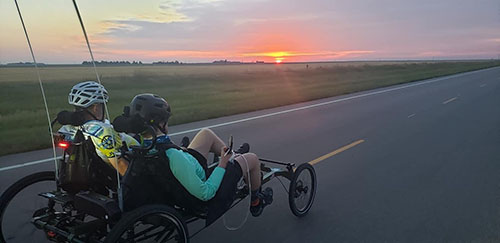
Josh was eager to get back on a bike, joining his dad Mike for a 908-mile trek on a side-by-side recumbent bike.
The Fohners now plan their lives around maximizing Josh’s independence.
They attend therapy two to three days a week, travel to the National Ability Center each year, and schedule outings such as camping and hunting.
While caregivers often struggle with burnout, Mike has learned to recognize warning signs. He now meets regularly with mentors and friends and encourages other caregivers to pay attention to their own needs.
“You need to be able to pay close attention to how you’re doing and don’t ignore red flags,” he said.
And when it comes to how others should approach people with TBIs, Mike’s guidance is simple: “Assume they’re all there … treat the person like they’re 100% there, and you’ll find your way with them.”
Still Fighting
Every step of Josh’s journey signals the same message the family felt with that first toe wiggle, the 908-mile ride, the first spoken hello — he’s here, and he’s fighting.
“We wanted to create as much autonomy for him as we could … we don’t even know what the goal is, but we know we won’t get there standing still,” Mike said. “So, we’re always pushing.”
Learn more about how WWP helps warriors thrive for a lifetime.
Contact: Paris Moulden, Public Relations, pmoulden@woundedwarriorproject.org, 904.570.7910
About Wounded Warrior Project
Wounded Warrior Project® (WWP) is the nation's leading veterans service organization, focused on the total well-being of post-9/11 veterans, active-duty service members, and their families. Our programs, advocacy, and awareness efforts help warriors thrive, provide essential lifelines to families and caregivers, and prevent veteran suicides. Learn more about Wounded Warrior Project.

Ever since he was a little kid, Brian Zreliak loved putting his mind onto paper. He didn’t need words to express himself, just some color and his imagination. “Brian’s been drawing since he...
“I joined the Army.” Christine Schei couldn’t believe her ears when she heard her son say those words. She couldn’t hide her heartbreak. It’s not that Christine didn’t believe in...
When Navy veteran Marquise Morris was stationed in Japan in 2011...

For many veterans, the battle doesn’t end when they return home — it simply changes form. And sometimes, the most effective weapon in that new fight is a paintbrush, a guitar, or the rhythm of...